ShoutOut ..

Rabu, 08 September 2010

Kemenangan Germany yang telak . . ^^
Germany menggilas lawan mainnya juga tamu dari pertandingan kualifikasi piala Eropa 2012, yaitu Azerbaijan di stadion Muengersdorfer, Koln, Rabu (8/9) dini hari WIB. Germany berhasil membantai tamunya dengan skor 6-1 atas jerman dan merebut posisi puncak klasemen sementara..
Jerman dan Turki yang turun keperingkat dua sama sama memiliki poin enam. Namun, tim Panser unggul selisih gol sehingga memuncaki grup A tersebut..
Striker Veteran Miroslav Klose masih menunjukkan kehebatannya. Penyerang Bayern Muenchen ini memborong dua gol bagi Jerman. Sementara, Lukas Podolski yang agak tenggelam dififa kemarin kembali tampil bersinar diEuro ini. Podolski juga tampil mengesankan dan menyumbang satu gol untuk Jerman..
Bermain dikandang sendiri, Jerman menunjukkan dominasinya sepanjang pertandingan. hanya, tuan rumah membutuhkan waktu 28 menit untuk membobol gawang lawan. gol pertama Jerman dihasilkan oleh Heiko Westermann yang memanfaatkan bola Rebound untuk menaklukan kiper Kamran Agayev..
Setelah gol itu, Jerman semakin agresif dan memanas menyerang pertahanan Azerbaijan yang lebih banyak bertahan. Podolski yang tampil dihadapan suporternya diKoln sukses memperbesar keunggulan jerman. dia mencetak gol menjelang berakhirnya babak pertama..
Selang satu menit, Jerman sudah unggul 3-0. kali ini, Podolski memberikan Assist kepada Klose yang diselesaikannya dengan baik..
Dibabak kedua, permainan Jerman tak berubah. bahkan tuan rumah berhasil memperbesar keunggulannya akibat gol bunuh diri kapten Rashad Sadhikov dimenit 53..
Azerbaijan sempat mencetak gol saat striker Vagif Dzhavadov memanfaatkan bola liar yang ditinju kiper Manuel Nuer pada menit ke-57. bola tersebut disambut oleh Dzhavadov dan gagal diselamatkan Nuer. wajah yang nampaknya Shock terlihat di muka Nuer saat itu. ia tidak percaya gawang yang ia jaga, akhirnya bobol akibat dari kecerobohan dalam menahan bola liar itu.. (it's okeh Nuer ^^)
dengan skor 4-1, Jerman masih bernafsu menambah gol. hasilnya, Holger Badstuber mencetak gol dimenit ke-86. dan, Klose menutup kemenangan timnya setelah mencetak gol kedua dipertandingan itu..
Kini, Klose mengoleksi 55 gol selama 103 kali membela timnas. bersama bintang masa lalu Joachim Streich, Klose menduduki peringkat kedua sebagai top skor sepanjang sejarah Jerman. Striker legendaris Gerd Muller masih bertengger diposisi teratas dengan mencetak 68 gol.. ^^
Germany vs Belgia .. (kualifikasi piala Eropa 2012..)
ternyata perjalanan Germany bisa dikatakan mulus. pertandingan Germany kemarin melawan Belgia berlangsung cukup lama. dan Germany hanya mendapat satu gol untuk gawang Belgia. memang tidak memuaskan, tapi dengan begitu Germany sudah mendekati titik kemenangan grup nanti . .
Miroslav Klose yang saat itu memasukkan bola kegawang Belgia pada menit ke57, membuat pelatih, pemain, dan semua Kru bersorak gembira. Belgia memang tak kalah hebatnya dengan Germany. Belgia mampu membuat kesebelasan Germany kelelahan. dengan melakukan Fast Break atau serangan balik/serangan cepat. Germany yang memiliki permainan Diesel, hampir tidak mampu menahan serangan dari Belgia. pertahanan Germany memang masih dibilang sangat kurang ..
semua itu hilang dan lenyap saat Klose membobol gawang Belgia dengan sepakkan kencang dari Klose..
Belgia pun kalah atas Germany, 0-1 . . ^_^
Kamis, 02 September 2010
Kualifikasi Piala Eropa 2012 sudah dimulai. .
hari sabtu, tanggal 04 september 2010 akan dimulainya kualifikasi piala eropa 2012. yaitu negara Belgia vs GERMANY. pukul 01.30 waktu dini hari nanti akan ditentukannya siapa yang akan masuk nanti. live dari rcti,kami semua akan menyaksikan kehebatan dan kehebohan dari tim Der Panzer . .
Go Panzer, Go Panzer, Go Panzer . . . !!!
Go Panzer, Go Panzer, Go Panzer . . . !!!
Jumat, 09 Juli 2010
Fifa World Cup 2010 in Durban AfSel city semifinal (Germany vs Spanis)..
tak diduga duga. permainan Germany dikunci oleh pemain Spains kemarin diDurban Afsel city. sangat jelas terlihat mereka mengklaim gerakan juga trik dari tim Panzer. Mesut Ozzil yang kesulitan menerima operan bola dari pemain yang lainnya,sangat berpengaruh besar untuk Panzer.Miroslav Klose yang selalu dijaga ketat dilini depan,membuat pengaruh besar untuk Klose yang kesulitan mencetak gol..
Bastian Schweinsteiger yang ada disayap kanan,terus memutar otak untuk mencetak gol dengan operannya. but, alhasil semua operan Schweini,malah bergiring untuk tim Matador saat itu. Joachim Loew,yang sudah menggebu gebu saat babak kedua malah menjadi bencana buat para pemain. karna,pada menit ke83 sundulan Puyol menggetarkan gawang Germany. Gerakan pemain Germany mulai redup. para pemain Germany,sangat terlihat memanas dan berapi rapi ..
waktu yang mengakhiri semuanya. skor terakhir,unggul 0-1 atas Spanyol ..
hemm..itulah ringkasan crita dari saya ..
Piala Dunia 2006 yang terulang lagii..
kekalahan yang ditelan oleh Germany pada saat semi final melawan Sapanyol dengan skor 0-1 cukup mengecewakan para pendukung panatik tim Der Panzer .. tapi, semua itu belum berakhir. karna masih ada Euro tahun 2012 dan Piala dunia 2014 di Brazil. saya sebagai pendukung paling fanatik tim Panzer, pasti menggantungkan harapan, keinginan, dan keyakinan menang dihati..
suasana pada saat bertanding terlihat sangat menegangkan. tampak sangat terlihat tim El Matador sedang bermain main trik dengan tim Der Panzer. posisi bola yang selalu dikuasai oleh Spanyol menyulitkan kerja sama antar tim Germany saat itu. begitu pula dengan penjagaan ketat oleh para pemain Spanyol..
pertandingan diDurban Afsel city, kemarin sudah membuat wajah coach Germany sangat emosional. begitu juga pemain bernomor punggung 13,Thomas Muller yang pada saat itu tidak diizinkan bermain karna mendapat hukuman 2 kartu kuning di2 laga pertandingan. raut wajah kecewa,kesal,dan tidak puas, sangat tergambar diwajah pemain yang mendapat julukan Golden Foot dan Golden Ball, yaitu Bastian Schweinsteiger dan Miroslav klose..
entah apa yang sedang direncanakan oleh tuhan saat ini. tapi, yang pastii Der panzer akan membalas itu semua dengan lapang dada,rendah hati, dan rasa bangga dari para pendukung juga pemain Germany ..
So, don't worry guys. it's not over for them. but,this beggining of everyone ..
just them that's can be winner .. hehe ^.^
Rabu, 30 Juni 2010
University Ludwig Maximilians of Munich ..

universitas yang berada dikota Muenchen, Germany ini memiliki murid sebanyak 44.000 orang. letaknya tepat dekat College street dan Wentworth street. universitas ini juga memiliki 700 profesor,3.600 anggota staff yang bertanggung jawab dari seluruh penjuru dunia. memiliki 18 fakultas tujuan yang menerapkan kedisiplinan akademik dan bidang penelitian agar murid mendapat kecerdasan akademik dan kreatifitas tinggi. fakultas yang terdiri 18,memiliki penerapan dan tujuan masing masing.
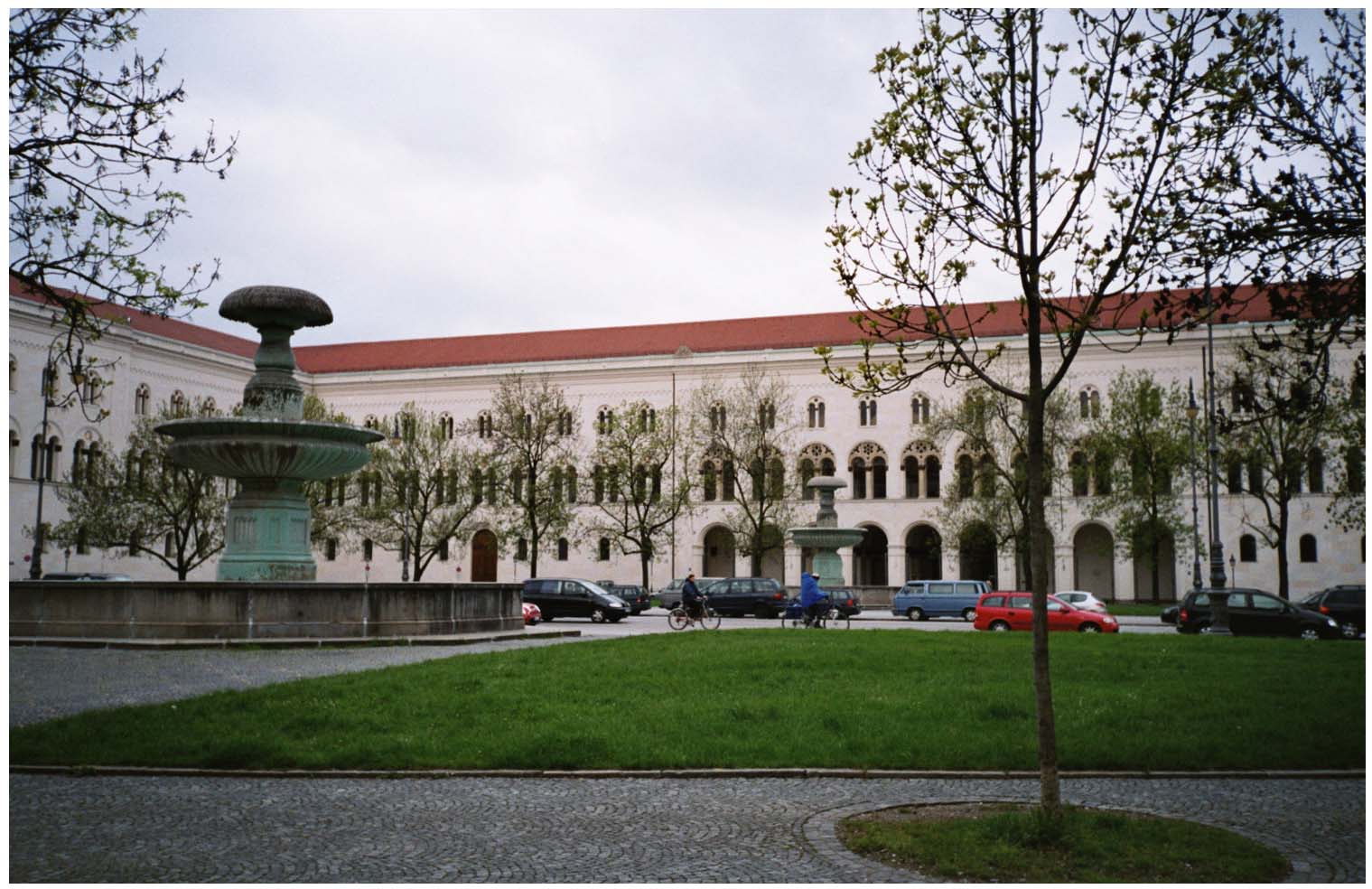
misalnya fakultas sejarah dan seni yang menyatu dalam satu gedung, tetapi memiliki penerapan dan tujuan masing masing. fakultas seni; menerapkan pengajaran yang lebih menuju kearah seni rupa dan musikal juga musik. seperti ilmu kesenian lukis,ilmu kesenian teater musikal,ilmu kesenian alat musik. fakultas sejarah; lebih kearah sejarah sejarah penting. seperti museum dan crita crita prasejarah yang memiliki topic dan ciri khas nya tersendiri.
universitas ini juga memiliki perpustakaan,lembaga afiliasi,pusat medis, dan sebagainya ada di Ludwig Maximilians University of Munich ..
link : //www.en.uni-muenchen.de//
Apakah Piala Dunia 2002 akan terulang lagi ??
Apakah Piala Dunia 2002 akan terulang lagi, untuk tahun ini?? 2010? huft. kalau semua itu terulang lagi, siapakah yang akan menang? apakah Brazil lagi? atau sebaliknya? yaitu Germany. rasa takut menghampiri saya ketika melihat Match untuk perdelapan final fifa 2010 nanti..
Uruguay vs Ghana, Belanda vs Brazil, Argentina vs Germany , Paraguay vs Spanyol ..
siapakah yang akan masuk keperempat final, semifinal, dan final nanti??
entahlah.. saya tidak tau.. tapi, yang pasti saya menginginkan Germany yang memenangkannya ..
mudah mudahan Germany menang melawan Argentina nanti hari Sabtu,03 2010 Cape Town Afrika Selatan ..
Doa kami para pendukung Germany, akan selalu menyertai kalian untuk memenangkan piala dunia 2010 Afrika Selatan .. Amiieennn ....
2002 FIFA worldcup final Brazil V Germany (highlights)
Germany menelan kekalahan dengan skor akhir 2-0 atas Brazil. Germany yang masih digawangi dan pemegang kapten yaitu Oliver Khan, berusaha semampunya untuk menjuarai piala dunia 2002 di Yokohama Jepang.


World Cup Final 1966 In Colour - England Vs West Germany
Germany mengalami kekalahan yang cukup menyesakkan dikarenakan, England yang sebenarnya hanya membobol gawang Germany 3 saja. satu goal dari England adalah goal yang tidak sah. karena masih dibatas garis gawang belum melewati garis gawang Germany ..
Competitive record ..
World Cup record :
Year Result Position GP W D* L GS GA Squad
1930 Withdrew - - - - - - - -
1934 Third place 3 4 3 0 1 11 8 Squad
1938 Round 1 10 2 0 1 1 3 5 Squad
1950 Banned - - - - - - - -
1954 Champions 1 6 5 0 1 25 14 Squad
1958 Fourth place 4 6 2 2 2 12 14 Squad
1962 Quarter-finals 7 4 2 1 1 4 2 Squad
1966 Runners-up 2 6 4 1 1 15 6 Squad
1970 Third place 3 6 5 0 1 17 10 Squad
1974 Champions 1 7 6 0 1 13 4 Squad
1978 Second Round 6 6 1 4 1 10 5 Squad
1982 Runners-up 2 7 3 2 2 12 10 Squad
1986 Runners-up 2 7 3 2 2 8 7 Squad
1990 Champions 1 7 5 2 0 15 5 Squad
1994 Quarter-finals 5 5 3 1 1 9 7 Squad
1998 Quarter-finals 7 5 3 1 1 8 6 Squad
2002 Runners-up 2 7 5 1 1 14 3 Squad
2006 Third place 3 7 5 1 1 14 6 Squad
2010 (qualified for Quarter-finals) - 4 3 0 1 9 2 Squad
2014
Total 17/19 3 Titles 96 58 *19 19 199 114 -
Confederations Cup Record :
Year Round GP W D* L GS GA Squad
1992 Did not qualify - - - - - - -
1995 Did not qualify - - - - - - -
1997 Did not enter - - - - - - -
1999 Round 1 3 1 0 2 2 6 Squad
2001 Did not qualify - - - - - - -
2003 Did not enter - - - - - - -
2005 Third Place 5 3 1 1 15 11 Squad
2009 Did not qualify - - - - - - -
Total 2/8 8 4 1 3 17 17 -
European Championship record :
Year Round GP W D* L GS GA Squad
1960 Did not enter - - - - - - -
1964 Did not enter - - - - - - -
1968 Did not qualify - - - - - - -
1972 Champions 2 2 0 0 5 1 Squad
1976 Runners-up 2 1 1 0 6 4 Squad
1980 Champions 4 3 1 0 6 3 Squad
1984 Round 1 3 1 1 1 2 2 Squad
1988 Semi-finals 4 2 1 1 6 3 Squad
1992 Runners-up 5 2 1 2 7 8 Squad
1996 Champions 6 4 2 0 10 3 Squad
2000 Round 1 3 0 1 2 1 5 Squad
2004 Round 1 3 0 2 1 2 3 Squad
2008 Runners-up 6 4 0 2 10 7 Squad
2012 - - - - - - -
2016 - - - - - - -
Total 10/13 38 19 10 9 55 39
Competition records ..
Germany has won the World Cup three times, behind only Brazil (five titles) and Italy (four titles). It has finished as runners-up four times. In terms of semifinal appearances, Germany leads with 11, one more than Brazil's 10, which had participated in two more tournaments. In the last 15 World Cup tournaments, Germany has always reached at least the stage of the last eight teams. Germany has also qualified for every of the 16 World Cups it has entered — it did not enter the inaugural competition in Uruguay of 1930 for economic reasons, and could not qualify for or compete in the post-war 1950 World Cup as the DFB was reinstated as a FIFA member only two months after this tournament.
Germany has also won the European Championship three times (France and Spain are the only other multiple-time winners with two titles), and finished as runners-up three times as well. The Germans have qualified for every European Championship tournament except for the very first EC they entered in 1968. For that tournament, Germany was in the only group of three teams and thus only played four qualifying games. The deciding game was a scoreless draw in Albania which gave Yugoslavia the edge, having won in their neighbor country.
Germany played in the FIFA Confederations Cup twice, in 1999 (first round exit) and in 2005 (third place) as hosts.
See also East Germany and Saarland for the results of these separate German teams, and Austria for the team that was merged into the German team from 1938 to 1945.
Nickname ..
In Germany, the team is typically referred to as the "Nationalmannschaft" (national team), "DFB-Elf" (DFB eleven), "DFB-Auswahl" (DFB selection) or "Nationalelf" (national eleven), whereas in foreign media, they are regularly described as the "Mannschaft" (literally meaning "Team").
Kit ..
Adidas AG is the longstanding kit provider to the national team, a sponsorship that began in 1954 and is contracted to continue until at least 2018. Nike, Inc. had been courting the team, and in August 2007 reportedly offered as much as €500 million to outfit the team for an eight-year period – a figure that is six times what adidas currently pays – but the federation decided to remain with Germany-based adidas.[8]
The national team's home dress has always been a white jersey and black shorts. The colours are derived from the 19th century flag of the north German State of Prussia. The away shirt colour has changed several times. Historically, green shirt with white shorts is the most often used alternative colour combination, derived from the DFB colors (and the ones of a playing field),[citation needed] though it is also reported that the choice is in recognition of the fact that Ireland, whose home shirts are green, were supposedly the first nation to play Germany in a friendly game after World War II.[9] This is false, as their first match after WWII was in fact against Switzerland.[10] Other colours such as grey and black have also been used. A change, from black to red, came in November 2004 on the request of Jürgen Klinsmann, citing that teams in red are statistically more successful, and perceived as more intimidating.[citation needed] He hoped to use the red away shirt as first choice for the 2006 World Cup despite less than impressive results when playing in these colors (for example, the 1–4 loss in Italy), but Germany played every game at the 2006 World Cup in its home white colours. In 2010 the away colours then changed back to a black shirt and white shorts. The new away kit was worn by the team for the first time in a friendly against Argentina on 3 March 2010.
The national team's home dress has always been a white jersey and black shorts. The colours are derived from the 19th century flag of the north German State of Prussia. The away shirt colour has changed several times. Historically, green shirt with white shorts is the most often used alternative colour combination, derived from the DFB colors (and the ones of a playing field),[citation needed] though it is also reported that the choice is in recognition of the fact that Ireland, whose home shirts are green, were supposedly the first nation to play Germany in a friendly game after World War II.[9] This is false, as their first match after WWII was in fact against Switzerland.[10] Other colours such as grey and black have also been used. A change, from black to red, came in November 2004 on the request of Jürgen Klinsmann, citing that teams in red are statistically more successful, and perceived as more intimidating.[citation needed] He hoped to use the red away shirt as first choice for the 2006 World Cup despite less than impressive results when playing in these colors (for example, the 1–4 loss in Italy), but Germany played every game at the 2006 World Cup in its home white colours. In 2010 the away colours then changed back to a black shirt and white shorts. The new away kit was worn by the team for the first time in a friendly against Argentina on 3 March 2010.
Stadium ..
Germany does not have a national stadium, and the national team's home matches are rotated among various stadia across the country. They have played home matches in 39 different cities so far – including venues which were German at the time of the match, such as Vienna, Austria, which staged three games between 1938 and 1942.
National team matches have most often (42 times) been held in the various stadiums of the city of Berlin. Berlin was also the venue of Germany's first home match in 1908 against England. Other common host cities include Hamburg (34 matches), Stuttgart (29) and Hanover (24). Another notable location is the city of Munich, which has hosted numerous notable matches throughout the history of German football including the 1974 World Cup Final which Germany won over Netherlands National Football Team.
National team matches have most often (42 times) been held in the various stadiums of the city of Berlin. Berlin was also the venue of Germany's first home match in 1908 against England. Other common host cities include Hamburg (34 matches), Stuttgart (29) and Hanover (24). Another notable location is the city of Munich, which has hosted numerous notable matches throughout the history of German football including the 1974 World Cup Final which Germany won over Netherlands National Football Team.
2010 FIFA World Cup => Final Qualification ..
The 2010 World Cup draw, which took place on 4 December 2009, placed Germany in Group D, along with Australia, Serbia and Ghana. On 13 June 2010, they played their first match of the campaign against Australia and won 4–0. Then, they played against Serbia on 18 June and lost 0–1. Their next match against Ghana was won 1–0 by a goal from Mesut Özil. Germany went on to win the group and advanced to the knockout stage and beat England and qualified to the quarter-finals. They will face Argentina in their next match.
Team v • d • e
Pld W D L GF GA GD Pts
Germany 3 2 0 1 5 1 +4 6
Ghana 3 1 1 1 2 2 0 4
Australia 3 1 1 1 3 6 −3 4
Serbia 3 1 0 2 2 3 −1 3
13 June 2010 :
20:30
Germany 4 – 0 Australia Moses Mabhida Stadium, Durban
Attendance: 62,660
Referee: Marco Antonio Rodríguez (Mexico)
Podolski 8'
Klose 26'
Müller 68'
Cacau 70'
18 June 2010 :
13:30
Germany 0 – 1 Serbia Nelson Mandela Bay Stadium, Port Elizabeth
23 June 2010 :
20:30
Ghana 0 – 1 Germany Soccer City, Johannesburg
Özil 60'
27 June 2010 :
16:00
Germany 4 – 1 England Free State Stadium, Bloemfontein
Attendance: 40,510
Referee: Jorge Larrionda (Uruguay)
Klose 20'
Podolski 32'
Müller 67', 70' Report Upson 37'
2010 FIFA World Cup => Qualification ..
In their penultimate match on 10 October 2009, Germany secured first place in their qualifying group for the 2010 World Cup by beating second placed Russia in Moscow 1–0.[7]
Team v • d • e
Pld W D L GF GA GD Pts
Germany 10 8 2 0 26 5 +21 26
Russia 10 7 1 2 19 6 +13 22
Finland 10 5 3 2 14 14 0 18
Wales 10 4 0 6 9 12 −3 12
Azerbaijan 10 1 2 7 4 14 −10 5
Liechtenstein 10 0 2 8 2 23 −21 2
Azerbaijan – 1 – 2 0 – 2 0 – 0 1 – 1 0 – 1
Finland 1 – 0 – 3 – 3 2 – 1 0 – 3 2 – 1
Germany 4 – 0 1 – 1 – 4 – 0 2 – 1 1 – 0
Liechtenstein 0 – 2 1 – 1 0 – 6 – 0 – 1 0 – 2
Russia 2 – 0 3 – 0 0 – 1 3 – 0 – 2 – 1
Wales 1 – 0 0 – 2 0 – 2 2 – 0 1 – 3 –
History => Oliver Kahn/Michael Ballack Era ..
Entering the 21st century, Germany's standing as one of the best national sides in the world, and as of a team that almost always reaches the later rounds of major tournaments, was starting to be discouraged by disappointing results.
In Euro 2000, the aging team went out in the first round after failing to win any of their three matches, including a 1–0 defeat to rivals England and an embarrassing 3–0 loss to a second-string Portugal side (the Portuguese having already advanced). Rudi Völler replaced Ribbeck as coach, initially on a temporary basis, and later permanently after planned successor Christoph Daum was involved in a drug scandal.
Coming into the 2002 World Cup, expectations of the German team were low, due to poor results in the qualifiers, including a 5–1 home defeat against England. However, they started out strong by thrashing Saudi Arabia 8–0 in their first match. At the knockout stages, they produced three consecutive 1–0 wins, against Paraguay, the United States, and co-hosts South Korea, setting up a final against Brazil, the first World Cup meeting between the two. However, with the pivotal Michael Ballack suspended due to accumulated yellow cards, Germany's chances had declined. In a hard-fought match, Germany lost 2–0. German captain and goalkeeper Oliver Kahn won the Golden Ball, the first time in the World Cup's history a goalkeeper was named best player of the tournament. Simultaneously, he won the Yashin-Award as the best goalkeeper.
Germany failed to build on their success in 2002, and again exited in the first round of Euro 2004 without winning a match. As was the case in 2000, the Germans bowed out after losing to the second-string side of a team that had already advanced, in this case that of the Czech Republic, in a match where Germany dominated but couldn't get the ball into the net, losing to a Czech goal scored on the break. Völler resigned afterwards, denouncing the constant media criticism in a famous TV interview, and the national team had to find their third new coach in six years, after having had only six coaches in the previous 75 years. As prospective candidates including Ottmar Hitzfeld and Otto Rehhagel turned down the job, former national team player Jürgen Klinsmann, who had never held any coaching jobs before, was appointed. In similar style to Beckenbauer's former role as team manager without a coaching license, the experienced Joachim Löw from Stuttgart would assist him. Klinsmann made Michael Ballack the captain following Euro 2004. Klinsmann's main task was to lead the national team to a good showing at the 2006 World Cup, which Germany were going to host. Although the host nation, hopes prior to the start of the tournament proper were not as high for Germany as in previous tournaments, even in Germany itself. Critics had pointed out the apparent lack of quality players in the squad and coach Klinsmann's decision to live in America rather than Germany.
Germany, however, won the opening game of the World Cup against Costa Rica 4–2. They continued to develop both confidence and support across the group stage, conceding no further goals as they beat Poland 1–0 and Ecuador 3–0, with Miroslav Klose scoring twice and Lukas Podolski adding another in the last match. Germany finished on top of the group with three wins.
The team went on to defeat Sweden 2–0 in the round of 16, with Lukas Podolski netting both goals in only 12 minutes, from assists by Miroslav Klose.
Germany faced favourites Argentina in the quarter-finals, a team that Germany had not defeated since the 1990 World Cup. Germany's shutout streak was broken shortly after half time as Argentina scored first to grab a 1–0 lead. However, Michael Ballack's cross, flicked on by Tim Borowski, allowed Klose to head in the equalizer with 10 minutes to spare. During penalties, Jens Lehmann stopped two spot kicks while his teammates made all of the necessary goals to win the decisive shootout 4 – 2. Afterwards, the Argentinians started a brawl, which later, after Italian TV showed video footage of Torsten Frings participating in the brawl, resulted in a ban for him.
These results produced much expectation in Germany, many thinking that a record eighth appearance at the final was possible even though a vital player was missing, and the team was tired after going the full distance against one of the best teams. Taking the semi-final against Italy to extra time again, hopes grew high that yet another penalty shoot-out would take the team to the final in Berlin. Despite Klinsmann's focus on fitness, speed and concentration of German players faded, conceding two goals in the dying ninety seconds of the extra time.
Despite having their dreams of playing in the final dashed, Klinsmann's squad quickly recovered their composure, and journalists noted the team's upbeat mood in the practices after the semi-final. Three starters, including captain Michael Ballack, would not be available for the third place match. They faced the Portuguese team, with goalkeeper Ricardo having only conceded one goal in regular play. Nonetheless, Germany thoroughly routed Portugal 3–1, at one point being up three goals to nil from Bastian Schweinsteiger's two goals and an own goal, also off his shot, by Portugal's Petit.
Germany managed to end the World Cup on a high, not only with a 3–1 win over Portugal in the battle for third place, but also with several awards: Miroslav Klose was awarded the Golden Boot for his tournament-leading five goals, becoming the first player from the united Germany to earn it, and fellow striker Lukas Podolski won the 'Best Young Player' award. Furthermore, four of Germany's players (Jens Lehmann, Philipp Lahm, Michael Ballack and Miroslav Klose) were selected for the 'Mastercard All-Star Team'. In addition, at 14 goals scored, the German side put away more goals than any other team. At the end of the tournament, more than 500,000 people celebrated the team's closing ceremony by giving them a heroes welcome at the Brandenburg Gate in Berlin. Germany had a much better World Cup than many – at home and abroad – ever believed possible.[citation needed]
Germany's entry into the Euro 2008 qualifying round was marked, not least, by the promotion of Joachim Löw to coach. In a group with the Czech Republic and the Republic of Ireland among others, Germany qualified comfortably, defeating San Marino in a historic 13–0 record away win on the way.
For the final tournament, Germany were placed into Group B alongside Poland, Croatia and longtime rivals Austria. Germany won 2–0 to Poland, but suffered an ignominious 2–1 defeat at the hands of Croatia, compounded by a red card for Bastian Schweinsteiger for an aggressive off-the-ball incident. Germany finally entered the knockout round with the victory over Austria in the last match of group play. The only scorer of the game was Michael Ballack, who scored in the 49th minute with a powerful long-distance free-kick, later chosen German Goal of the Year. Their quarterfinal opponent was Portugal who won their group comfortably. Germany started very well and took an early lead after a great team move led to Schweinsteiger finishing a cross from Lukas Podolski. Germany then took a 2–0 lead when Schweinsteiger curled in a free kick from the left side and Miroslav Klose headed the ball in. Portugal responded with a goal just prior to halftime, but after the second half began Germany reclaimed their two goal lead. Schweinsteiger delievered another free kick into the Portuguese penalty box and Michael Ballack headed the ball into the net to make the score 3–1, and Germany saw out the rest of the match comfortably, conceding a late consolation goal leaving the final score at 3–2.
Germany went into their semi-final clash against Turkey as overwhelming favorites. However, the team put up a nervous and shaky performance, getting behind by an Uğur Boral goal in the 22nd minute. Bastian Schweinsteiger equalised, and Miroslav Klose put Germany ahead with less than twelve minutes left only for Semih Şentürk to level the score in the last minutes of the match. Just as the game was heading for extra time, Philipp Lahm cut inside past Colin Kazim-Richards, exchanged passes with Thomas Hitzlsperger and stole in at the near post to score in the final minute, sending Germany into the final against Spain.
Spain were heavy favourites but many believed that Germany would be one of the few sides able to challenge them. After an opening 15 minutes in which Germany had the upper hand and nearly scored, Spain slowly came back into the game and then took the lead when Fernando Torres capitalised on a mistake made by the German defence. Although a Spanish defender appeared to handle the ball inside the box in the second half, Spain had the better of play for the remainder of the match and Germany finished runners-up.
Recent history was marked by Löw's attempts to rejuvenate the squad, bring in new players such as René Adler or Serdar Tasci in order to spark internal competition, which has led to some disharmony in the squad.[6] For the qualification for World Cup 2010, Germany were placed in a group with Azerbaijan (led by former Germany coach Berti Vogts), Finland, Liechtenstein, Russia and Wales.
History => After Reunification: Berti Vogts ..
In February 1990, months after the fall of the Berlin wall, the draw for the 1992 European Championship qualifying tournament had seen East Germany and West Germany drawn together in Group 5, scheduled to start in September. After the World Cup win, with assistant Berti Vogts taking over as the national team coach, the retiring Beckenbauer infamously predicted that the German team, with additional former East Germans to choose from, would be invincible for years to come. The reunification of Germany was confirmed in August to take effect on 3 October 1990, with the access of the former GDR to the Federal Republic of Germany. The members of the East German association Deutscher Fußball-Verband acceded to the DFB in November, while the 1990/91 seasons would continue, with the leagues being restructured for 1991/92. The first game which saw a unified German team including former East German internationals such as Matthias Sammer and Ulf Kirsten was against Switzerland on 19 December.
In Euro 92, Germany reached the final, but lost 2–0 to surprise winners Denmark. As defending champions in the 1994 World Cup, they were upset 2–1 in the quarter-finals by Bulgaria after taking the lead.
Germany won their first major international title after the reunification at Euro 96, becoming European champions for the third time. They defeated England, who were the hosts, again on penalty kicks (6–5, after a 1–1 draw) in the semi-finals, and the Czech Republic 2–1 in the final, a match decided by a golden goal scored by Oliver Bierhoff.
However, in the 1998 World Cup, Germany were again eliminated by a less heralded opponent in the quarter-finals, this time in a 3–0 rout by Croatia. Vogts stepped down afterwards and was replaced by Erich Ribbeck.
Langganan:
Postingan (Atom)